
Explore Jesus → The Good News
Curious About Jesus?
Maybe you grew up around Christianity. Maybe you didn't. Maybe you believe in God but aren't sure what you believe about Jesus. Or maybe you've been away from church for years and are wondering whether it's time to explore again.
Wherever you're starting from, you're welcome to bring your questions. Christianity begins with an announcement that Christians believe changes everything: there is good news.


We Were Made for More
Most of us sense that life is supposed to be more than simply getting through the week. We want our lives to matter, our relationships to last, and our world to be different from the broken world we see around us.
The Christian story says those longings point toward something real. We were made by God and for God, created to know him, love one another, care for his world, and live with purpose in his presence.
Yet we know something has gone wrong. We see injustice, loneliness, violence, and broken relationships around us, and we find selfishness, fear, and resentment within ourselves too. The Bible calls this sin: our tendency to live apart from God and put ourselves at the center of lives meant to be centered on him.
God Came Looking for Us in Jesus
Christianity isn't primarily the story of human beings trying hard enough to find their way back to God. It's the story of God coming to find us.
God came to us in Jesus. Jesus welcomed outsiders, healed the sick, forgave sinners, confronted evil, and announced that God's kingdom was arriving. He showed us what God is like and what human life was always meant to be.
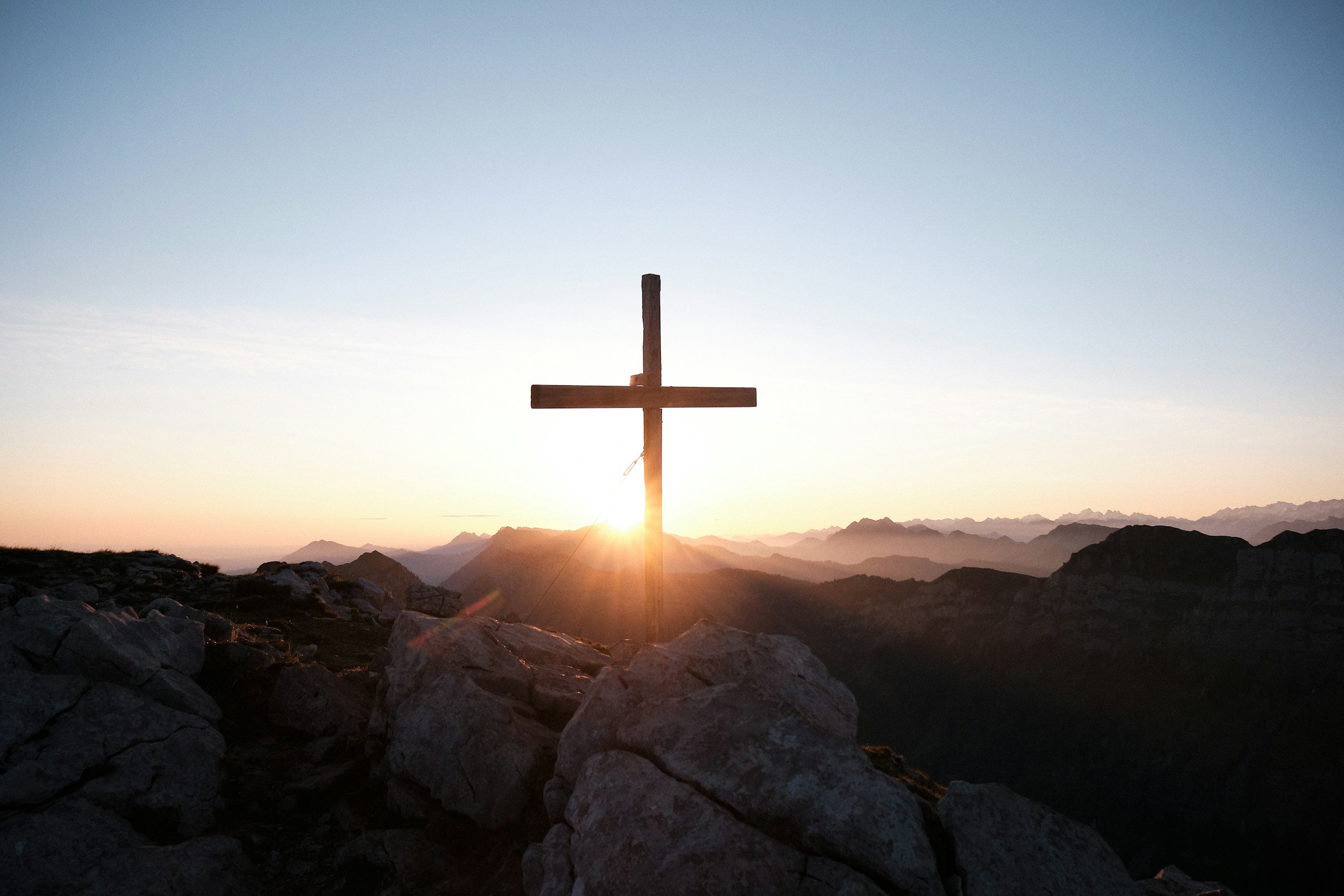
Then Jesus went to the cross. Christians believe that through his death, Jesus dealt with our sin and made reconciliation with God possible. Three days later, God raised him from the dead.
That's why Christianity is good news. Sin, shame, and death do not get the last word. Jesus is alive, and God has begun making all things new.

How Do I Become a Christian?
Becoming a Christian means responding to what God has done in Jesus. The Bible describes that response with two words: repent and believe.
To repent means to turn away from living life on our own terms and turn toward God. To believe means more than agreeing that God exists; it means placing our trust in Jesus and what he has done for us rather than trusting our own goodness to make us right with God.
We receive God's forgiveness as a gift of grace, give Jesus our lives, and begin to follow him. You don't need to clean yourself up first or understand everything about Christianity. You can begin right where you are.
Talk honestly to God. Ask for his forgiveness. Tell Jesus that you trust him and want to follow him. There aren't magic words that make someone a Christian; what matters is turning toward Jesus in faith.
And that's only the beginning. Jesus invites us into an entirely new kind of life with God, beginning now.
God loves this world. Jesus is alive. Grace is available. God is making all things new. And you are invited.
Explore Further
Read the Gospel of Mark or John to encounter Jesus through the stories of his life. BibleProject offers free resources for understanding the Bible, and Alpha provides opportunities to explore Christianity and discuss questions about faith.
Questions About Faith
Good questions deserve thoughtful conversations.
Maybe you grew up in church and have begun questioning things you once believed. Maybe you've never considered yourself religious, but you're curious about Jesus. Or maybe you've been hurt by Christians or encountered things in the Bible that trouble you.
We believe Christianity's claims about God, human life, and the world deserve to be taken seriously. That includes asking difficult questions.
The Bible itself is filled with people wrestling with faith. Job questions God's justice. The Psalms express doubt, anger, and disappointment. Habakkuk asks why God seems silent in the face of injustice (Habakkuk 1:2–4). Even Jesus' closest followers sometimes struggled to understand him.
At Brockport Free Methodist Church, our faith is rooted in historic Christianity and shaped by the Wesleyan tradition. We believe the Bible is God's inspired Word, that Jesus Christ is the Son of God who died and rose again, and that salvation is found through him. We also believe God's grace reaches toward every person and that the Holy Spirit can transform our lives.
We don't claim to have easy answers to every question. But we believe Christianity offers a compelling way of understanding our lives and our world, centered on Jesus Christ.
Here are Some Questions Worth Exploring
Does God really exist?
Christians believe God exists, but we recognize that belief in God raises serious questions. What reasons are there to believe the universe has a Creator rather than simply existing on its own?
The Bible begins with the declaration that God created the heavens and the earth (Genesis 1:1). The apostle Paul describes God as the one in whom we live, move, and have our being (Acts 17:24–28). Christians understand God not as another object within the universe, but as the source of its existence.
People have offered many reasons for believing in God. Some point to the existence and intelligibility of the universe, the conditions that make life possible, our experience of moral obligation, or the human longing for meaning. The biblical writers also describe the natural world as a witness to God's glory (Psalm 19:1–4; Romans 1:19–20).
Others find these arguments unpersuasive and believe natural explanations are sufficient. Christians don't believe that arguments for God's existence amount to mathematical proof, and thoughtful people disagree about their strength.
Our Wesleyan tradition emphasizes that God has not left humanity to discover him entirely on its own. We believe God's grace is already at work, awakening our desire for truth, goodness, and a relationship with him. John Wesley called this prevenient grace, meaning the grace that comes before our conscious response to God.
This doesn't mean every spiritual longing proves God's existence. It means Christians believe God is actively seeking us, even before we recognize his presence.
Christianity makes a more particular claim: that the Creator has made himself known through Jesus Christ. The Gospel of John describes Jesus as the eternal Word through whom all things were made and who entered human history (John 1:1–14). Jesus himself tells his disciples that to see him is to see the Father (John 14:9).
For Christians, the question isn't simply whether some higher power exists. It's whether Jesus reveals a God who knows us and loves us.
If you're exploring the question of God, we think Jesus is a wonderful place to begin.
Explore further: Genesis 1:1–31; Psalm 19:1–6; Acts 17:22–31; John 1:1–18.
Can we really trust the Bible?
We believe the Bible is trustworthy and authoritative, but that doesn't mean every question about it has an easy answer. The Bible is an ancient collection of writings, and understanding it requires careful reading.
The Bible was written over many centuries by different authors, in different languages and historical circumstances. It contains history, poetry, law, prophecy, letters, and accounts of Jesus' life. We shouldn't read a poem as though it were a scientific report or an ancient letter as though it were written directly to twenty-first-century Americans.
Christians also have good reasons to take the Bible's historical foundations seriously. The New Testament writings circulated among early Christian communities, and thousands of surviving Greek manuscripts, along with ancient translations and quotations, allow scholars to study how the text was transmitted. These manuscripts contain variations, but textual criticism helps scholars identify many copying differences and reconstruct the earliest recoverable text.
The Gospels were written within the first century, close enough to the events they describe to preserve early testimony about Jesus. They also reflect the perspectives and theological purposes of their authors. Historians can investigate their claims, although manuscript evidence alone cannot establish that every event they describe happened.
At BFMC, we believe Scripture is inspired by God and is the trustworthy, authoritative foundation for Christian faith and life (2 Timothy 3:16–17; 2 Peter 1:20–21). Taking the Bible seriously doesn't mean ignoring difficult passages, apparent tensions, or troubling moral questions. It means engaging them honestly while remaining open to what God may be teaching us.
John Wesley approached Scripture as the primary authority for Christian faith while also drawing upon the wisdom of the Church, careful reasoning, and Christian experience. These resources help us understand Scripture rather than replace its authority.
Above all, Christians believe the Bible tells a story that finds its fulfillment in Jesus Christ. Jesus taught that the Scriptures point toward him (Luke 24:27, 44–47; John 5:39–40). We therefore read the Bible with Jesus at the center, seeking to understand God's character through his life, death, and resurrection.
If you've never read the Bible, consider beginning with the Gospel of Mark or John. You don't need to settle every question before discovering what these writings say about Jesus.
Explore further: Luke 1:1–4; Luke 24:13–35; Acts 17:10–12; 2 Timothy 3:14–17; John 20:30–31.
Why does God allow suffering?
We don't have an explanation that makes every experience of suffering understandable. And we would be cautious of anyone who claims to know exactly why God allowed a particular tragedy.
Behind this question may be the death of someone we love, a painful diagnosis, an experience of abuse, or the suffering of innocent people. If God is good and powerful, why doesn't he prevent more of it?
The Bible doesn't ignore this question. Job struggles to understand his suffering. The psalmists repeatedly ask why God seems distant (Psalm 13:1–2; Psalm 22:1–2). Habakkuk questions why injustice continues (Habakkuk 1:2–4). These questions are part of Scripture itself.
Our Wesleyan tradition emphasizes God's love and the meaningful freedom he gives human beings. We believe God created us for loving relationships, not mechanical obedience. Human freedom makes genuine love possible, but it also makes terrible choices possible. Much suffering results from the misuse of that freedom.
Of course, not all suffering results from human choices. Disease, natural disasters, and other tragedies raise additional questions. Jesus rejected the assumption that suffering always results from a person's individual sin (John 9:1–3; Luke 13:1–5). We should be equally careful about assigning spiritual explanations to another person's pain.
Christianity makes a remarkable claim: God has not remained distant from human suffering. In Jesus Christ, God entered a world of injustice, grief, betrayal, violence, and death. Jesus wept at the grave of Lazarus (John 11:35), experienced anguish in Gethsemane (Mark 14:32–36), and suffered on the cross.
Christianity doesn't teach that suffering is good or that every tragedy happens because God wanted it to. It tells us that God meets us in suffering and that, through Jesus' resurrection, suffering and death will not have the final word.
The Bible ends with a vision of God making all things new, wiping away every tear, and bringing an end to death, mourning, crying, and pain (Revelation 21:1–5).
That hope doesn't eliminate our questions. But it means we can bring them to a God who understands what it means to suffer.
If you're carrying grief or wrestling with suffering, we'd be glad to listen, pray with you if you'd like, and walk alongside you. You don't have to find an explanation for your pain before reaching out.
Explore further: Job 38–42; Psalm 13; John 11:17–44; Romans 8:18–39; Revelation 21:1–5.
Hasn't science made Christianity unnecessary?
We don't think so. Science has transformed our understanding of the universe, and Christians have good reasons to welcome scientific discovery. But science and Christian faith don't always address the same kinds of questions.
Science helps us investigate how the natural world works. It has expanded our understanding of the age of the earth, the development of life, and the workings of the human body. Christian theology also asks why anything exists at all, whether human life has ultimate meaning, and what it means to live well.
The Bible describes creation as a reflection of God's wisdom and goodness. Psalm 19 celebrates the heavens as a witness to God's glory. Psalm 104 describes the intricate relationships within the natural world, while Genesis 1 repeatedly affirms the goodness of creation.
Christians agree that God is the Creator of everything that exists (Genesis 1:1; Colossians 1:15–17). They have sometimes disagreed about how to interpret particular details of the creation accounts and how those accounts relate to scientific discoveries.
These areas can overlap, and real disagreements exist about evolution, the interpretation of Genesis, and the relationship between scientific findings and biblical accounts. Those questions deserve careful consideration rather than easy dismissal.
Our Wesleyan heritage values thoughtful faith. John Wesley encouraged education, careful observation, and the study of the natural world. He understood reason as a gift that could help people appreciate creation and understand Scripture.
Belief in God doesn't require rejecting the scientific method, and scientific discovery doesn't automatically eliminate the possibility of a Creator. Many Christians understand the natural processes studied by science as part of the world God has made and sustains.
At BFMC, we believe faith and intellectual curiosity belong together. We don't think people should have to choose between taking the Bible seriously and taking the natural world seriously.
Explore further: Genesis 1–2; Psalm 19; Psalm 104; Colossians 1:15–20.
Did Jesus really rise from the dead?
We believe he did. And because the resurrection is central to Christianity, we think the historical evidence deserves serious consideration.
The earliest Christians didn't merely claim that Jesus' teachings lived on or that his followers continued to feel his presence. They proclaimed that Jesus, who had been executed by Roman authorities, was raised bodily from the dead.
The apostle Paul makes the importance of this claim unmistakable. In 1 Corinthians 15:12–19, he argues that if Christ has not been raised, Christian preaching and faith are ultimately empty.
The Gospel accounts describe Jesus' empty tomb and encounters with the risen Jesus (Matthew 28; Luke 24; John 20–21). Paul also preserves an early summary of Christian belief identifying witnesses who claimed to have seen the risen Christ (1 Corinthians 15:3–8).
Historians can investigate the sources surrounding these claims, including early Christian writings, the circumstances of Jesus' execution, and the emergence of the resurrection movement. Paul's letters show that belief in the resurrection was central to Christianity from its earliest decades.
Historical investigation cannot reproduce the resurrection in a laboratory, and people disagree about how best to explain the evidence. Some find the testimony of the early Christians persuasive, while others remain skeptical of miraculous explanations.
Christians believe the resurrection is God's decisive victory over sin and death. It vindicates Jesus' identity, announces the beginning of a new creation, and gives us hope that death will not have the final word.
Our Wesleyan tradition emphasizes that salvation is not only about forgiveness but also transformation through the Holy Spirit. Because Jesus is alive, we believe God can change our hearts, free us from the power of sin, and teach us to love God and our neighbors more fully (Romans 6:4–11; Galatians 5:22–25).
The resurrection isn't simply a historical claim about what happened to Jesus. It's the foundation of Christian hope for our lives and for the future of creation.
If you're curious, try reading Luke 24 or John 20. Ask what these accounts claim happened, why the first Christians believed it, and what it would mean if they were right.
Explore further: Luke 24; John 20; Acts 2:22–36; Romans 6:1–11; 1 Corinthians 15.
Isn't Christianity responsible for a lot of harm?
Yes. Christians and Christian institutions have sometimes caused terrible harm, and that history should not be minimized.
Christians have participated in slavery, colonialism, religious persecution, racism, and the abuse of power. Churches have sometimes protected their reputations instead of vulnerable people, silenced those who raised concerns, or confused loyalty to an institution with faithfulness to Jesus.
These failures have caused real suffering, sometimes across generations.
The Bible itself is remarkably candid about the failures of God's people. The prophets condemned religious communities that neglected justice and exploited the vulnerable (Isaiah 1:10–17; Amos 5:21–24). Jesus sharply criticized religious leaders who burdened others, neglected mercy, and used spiritual authority for their own benefit (Matthew 23).
Jesus also taught that leadership among his followers should be characterized by service rather than power (Mark 10:42–45).
Our Free Methodist heritage speaks directly to this question. The Free Methodist Church was founded in 1860 by Benjamin Titus Roberts and other Christians who believed the Church needed to confront injustices within its own life. They opposed slavery, challenged the practice of renting church pews to those who could afford them, and advocated for women's participation in Christian ministry.
Their example reminds us that loyalty to Jesus is not the same as defending every action of a religious institution.
Christianity has also inspired movements for justice, education, healthcare, abolition, and care for the poor. Those contributions matter, but they don't erase the harm Christians have done.
We believe the appropriate Christian response begins with honesty, repentance, accountability, and meaningful change. Scripture calls Christians not merely to speak about love, but to demonstrate it through their actions (1 John 3:16–18). James warns that religious devotion without practical care for vulnerable people is empty (James 1:26–27).
We also believe the Church, despite its failures, is deeply loved by Jesus and called to participate in his work of reconciliation and renewal (Ephesians 5:25–27; 2 Corinthians 5:18–20). Its failures make the call to repentance and faithfulness all the more urgent.
At BFMC, we want to be a church that takes Jesus seriously enough to examine our own lives and practices. We know that living faithfully requires humility, accountability, and a willingness to change.
If you've been hurt by a church, we don't expect you to dismiss that experience in order to explore Christianity. Your story matters, and you deserve to be heard.
Explore further: Isaiah 1:10–17; Amos 5:21–24; Matthew 23; Mark 10:35–45; James 1:26–27.
Isn't Christianity exclusive? What about people of other religions?
Christianity makes a distinctive claim: salvation is found through Jesus Christ. We don't believe that all religions are simply different paths to the same destination, and we don't think it would be honest to pretend otherwise.
Christians believe Jesus is uniquely significant because he is not simply another religious teacher. We believe that in Jesus, God entered human history, reconciled the world to himself through the cross, and defeated death through the resurrection.
Jesus described himself as the way, the truth, and the life (John 14:6). The apostles similarly proclaimed that salvation comes through him (Acts 4:12).
At the same time, our Wesleyan tradition emphasizes the extraordinary breadth of God's love and grace. We believe Jesus Christ died for the sins of the whole world (John 3:16–17; 1 John 2:2). God's grace reaches toward every person, inviting each of us to respond in faith.
John Wesley described this as prevenient grace: God's loving initiative that comes before our response, awakening us to our need for him and enabling us to turn toward Christ. This doesn't mean everyone is automatically saved. It means God's offer of grace is genuinely extended to all.
Scripture teaches that God desires all people to be saved (1 Timothy 2:3–6) and that his judgments are perfectly just (Genesis 18:25). We therefore approach people of other faiths with humility and respect, trusting God with questions about individual lives that we cannot fully answer.
Believing something is true doesn't give us permission to treat people who disagree with contempt. Every human being bears God's image (Genesis 1:26–27). Jesus commanded his followers to love their neighbors and even their enemies (Matthew 5:43–48). Peter instructed Christians to explain their hope with gentleness and respect (1 Peter 3:15–16).
Our responsibility is to bear witness to Jesus with humility, love our neighbors, and trust God's goodness and justice.
If you come from another religious background, we'd be glad to hear your story and learn what questions you have about Jesus. You don't need to hide your beliefs to have a meaningful conversation with us.
Explore further: Genesis 1:26–27; John 3:16–17; John 14:1–7; Acts 17:22–31; 1 Timothy 2:1–6; 1 Peter 3:13–16.
What if I have doubts?
You don't need to have every question answered before you begin exploring Jesus. The Bible itself includes people who wrestled with uncertainty, disappointment, and difficult questions about God.
The Psalms contain prayers of confusion and protest. Job wrestles with suffering and divine justice. Habakkuk questions God's apparent silence in the face of injustice.
One of the most moving stories in the Gospels involves a father who brings his suffering child to Jesus. When Jesus invites him to believe, the father responds, "I believe; help my unbelief!" (Mark 9:24).
Jesus doesn't dismiss him.
After the resurrection, Thomas struggled to believe the testimony of the other disciples. Jesus met Thomas in his doubt and invited him to examine the evidence before him (John 20:24–29).
Our Wesleyan tradition emphasizes that faith is not simply agreement with a set of ideas. It is a living relationship with God, made possible by grace and nurtured through prayer, Scripture, worship, and Christian community.
John Wesley himself experienced seasons of spiritual uncertainty. In 1738, during a gathering on Aldersgate Street in London, he described a profound assurance of God's grace and his trust in Christ for salvation. That experience became an important part of his spiritual journey, though it didn't mean he would never face further struggles.
Doubt can emerge from intellectual questions, painful experiences, disappointment, or a desire to distinguish what we've inherited from what we genuinely believe. Not every question is resolved quickly, and some may remain open for a long time.
We believe God welcomes honest questions, and we also believe he invites us toward trust. The goal of exploring faith isn't to remain indefinitely uncertain, but to discover whether Jesus is who he claimed to be and what it would mean to follow him.
Faith isn't the absence of every unanswered question. It's learning what it means to trust God, even as we continue seeking understanding.
At BFMC, we open Scripture together, pray for one another, and learn to follow Jesus in the middle of ordinary life. You don't need to have everything figured out to join us in that journey.
Explore further: Psalm 13; Habakkuk 1–3; Mark 9:14–29; John 20:24–29; Romans 8:15–16.
Can I come to BFMC if I'm not sure what I believe?
Absolutely. You don't need to be a Christian to attend BFMC, and you don't need to agree with everything we teach before walking through the doors.
Jesus regularly welcomed people who were curious, skeptical, confused, or unsure what to make of him. When two of John the Baptist's disciples asked where Jesus was staying, he responded with a simple invitation: "Come and see" (John 1:35–39).
Later, when Nathanael expressed skepticism about Jesus, Philip offered the same invitation (John 1:43–46).
We hope BFMC reflects something of that spirit.
Hospitality is deeply connected to our Free Methodist heritage. When the Free Methodist Church began in 1860, its founders challenged the practice of charging people for preferred seating in worship. They believed the Church should be a place where people could encounter God without barriers created by wealth or social status.
That conviction continues to shape our understanding of Christian community. We believe every person bears God's image and deserves to be treated with dignity and love, regardless of their background, questions, or beliefs.
You're welcome to join us on Sunday mornings, listen to the teaching, get to know people, and ask questions. You can participate at your own pace while you explore what you believe about Jesus.
We are a Christian church with real convictions. We believe Jesus is Lord, that Scripture matters, and that following Jesus changes the way we live. We won't hide those convictions, but we also won't expect you to pretend they're already yours.
Our mission is to help more people find and follow Jesus in Brockport and beyond. Whether you've followed Jesus for years or are only beginning to wonder about him, we'd love to meet you.
Explore further: John 1:35–51; Luke 15:1–32; Mark 2:13–17; Romans 2:4.
Let's Keep Talking
A webpage can introduce a conversation, but it can't replace one. Your questions may be more personal, complicated, or specific than anything we've addressed here.
If you'd like to talk about Jesus, the Bible, a difficult experience with Christianity, or something you're wrestling with, we'd welcome the opportunity to listen and explore those questions with you.
Want to learn more about the convictions that shape our church? [Explore Our Free Methodist Heritage.]